
Free Guide for Parents: Why Your Teenage Son Is Having Emotional Meltdowns—and What to Do
Is your teenage son exploding emotionally, shutting down, or becoming increasingly angry—and you’re not sure why?
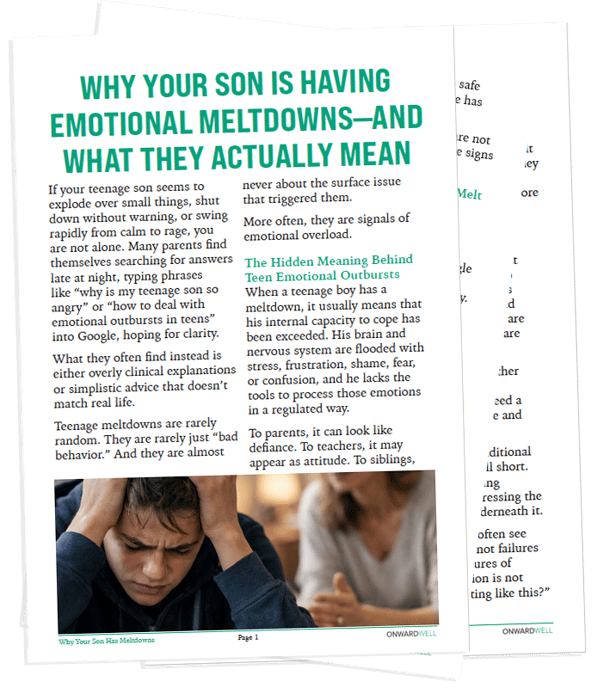
If This Feels Familiar, You’re Not Alone
Many parents notice changes in their teenage sons that are difficult to explain.
A boy who was once easygoing may become angry over small things. A teen who seemed confident may begin shutting down emotionally or withdrawing from family life. Outbursts may happen at home, even when teachers or friends see a completely different version of him.
You may feel like you are walking on eggshells, unsure what will trigger the next meltdown. You may find yourself questioning whether this is normal adolescence, anxiety, ADHD, stress, or something more serious.
And you may feel caught between two fears: being too strict and pushing him away, or being too lenient and reinforcing behavior you know cannot continue.
Many parents sense that something deeper is happening—but struggle to name it.
If any of this sounds familiar, this guide was written for you.

"
What Looks
Like Defiance is Often Emotional Overwhelm.
Teen Meltdowns Are Not What Most Parents Think
Most parents assume that emotional meltdowns are about defiance, attitude, or a lack of discipline. In reality, teenage boys often melt down when they have reached the limits of their emotional capacity.
Adolescence is a period of intense neurological, social, and psychological change. Teen boys are expected to manage academic pressure, social expectations, identity questions, and constant stimulation from digital life—often without the emotional language or skills to process what they feel.
When stress accumulates, emotions do not always come out as sadness or fear. They often appear as anger, shutdown, or explosive reactions that feel disproportionate to the situation.
Understanding this does not mean excusing harmful behavior. It means responding in ways that build emotional regulation rather than escalating conflict.
This guide helps parents move beyond surface-level explanations and begin to understand what is actually happening beneath their son’s reactions.
It reflects real-world work with teenage boys and families navigating emotional overload, anxiety, and behavioral challenges.